
The Number One Question We Hear From Homeowners
If you're thinking about remodeling your kitchen, the first question on your mind probably isn't about tile patterns or cabinet finishes. It's this: How long is this going to take?
It's a fair question. Your kitchen is the most-used room in your home. It's where you cook, eat, gather with family, and start your mornings. The idea of living without a fully functional kitchen for weeks — or months — can feel overwhelming.
At Hartwell Home Extension, we work with homeowners across Lauderhill and the surrounding communities every day, and we've learned that setting clear expectations about timelines is one of the most important things we can do. So let's walk through what a realistic kitchen remodel timeline looks like, what causes delays, and how you can help keep your project moving smoothly.
The Short Answer: 6 to 12 Weeks for Most Projects
A typical kitchen remodel in Lauderhill takes between 6 and 12 weeks from the start of demolition to the final walkthrough. That's the construction phase alone — it doesn't include the planning, design, and material selection that happens before any tools come out.
Here's a general breakdown:
- Minor remodel (cosmetic updates like new countertops, cabinet refacing, and fresh fixtures): 4 to 6 weeks
- Mid-range remodel (new cabinetry, countertops, flooring, and appliance upgrades): 6 to 10 weeks
- Major remodel (full gut renovation, layout changes, plumbing relocation, structural modifications): 10 to 16 weeks
These ranges assume that materials are ordered and available, permits are secured, and no major surprises pop up behind the walls. More on that in a moment.
Phase-by-Phase Timeline Breakdown
Understanding what happens during each phase helps you see why a quality kitchen remodel takes the time it does. Rushing any of these steps leads to problems down the road.
1. Planning and Design (2 to 4 Weeks)
Before construction begins, you'll work with your remodeling team to finalize the design, choose materials, and establish a budget. This is when you select your cabinetry style, countertop material, tile patterns, fixtures, and appliances. If permits are needed — and in Lauderhill, they often are for plumbing or electrical work — this is when those get submitted as well.
2. Demolition (2 to 5 Days)
Once the project kicks off, the existing kitchen comes out. Old cabinets, countertops, flooring, and sometimes walls are removed. This phase is fast but messy, so plan accordingly.
3. Rough-In Work (1 to 2 Weeks)
This is when plumbing lines get moved, electrical wiring is updated, and any structural changes are made. If you're relocating your sink, adding an island with a water line, or upgrading your electrical panel to handle new appliances, this is the phase where it happens. Inspections are typically required before moving forward.
4. Drywall, Painting, and Prep (3 to 5 Days)
Walls are patched or replaced, primed, and painted. This step needs to be completed before cabinets go in, so the timing matters.
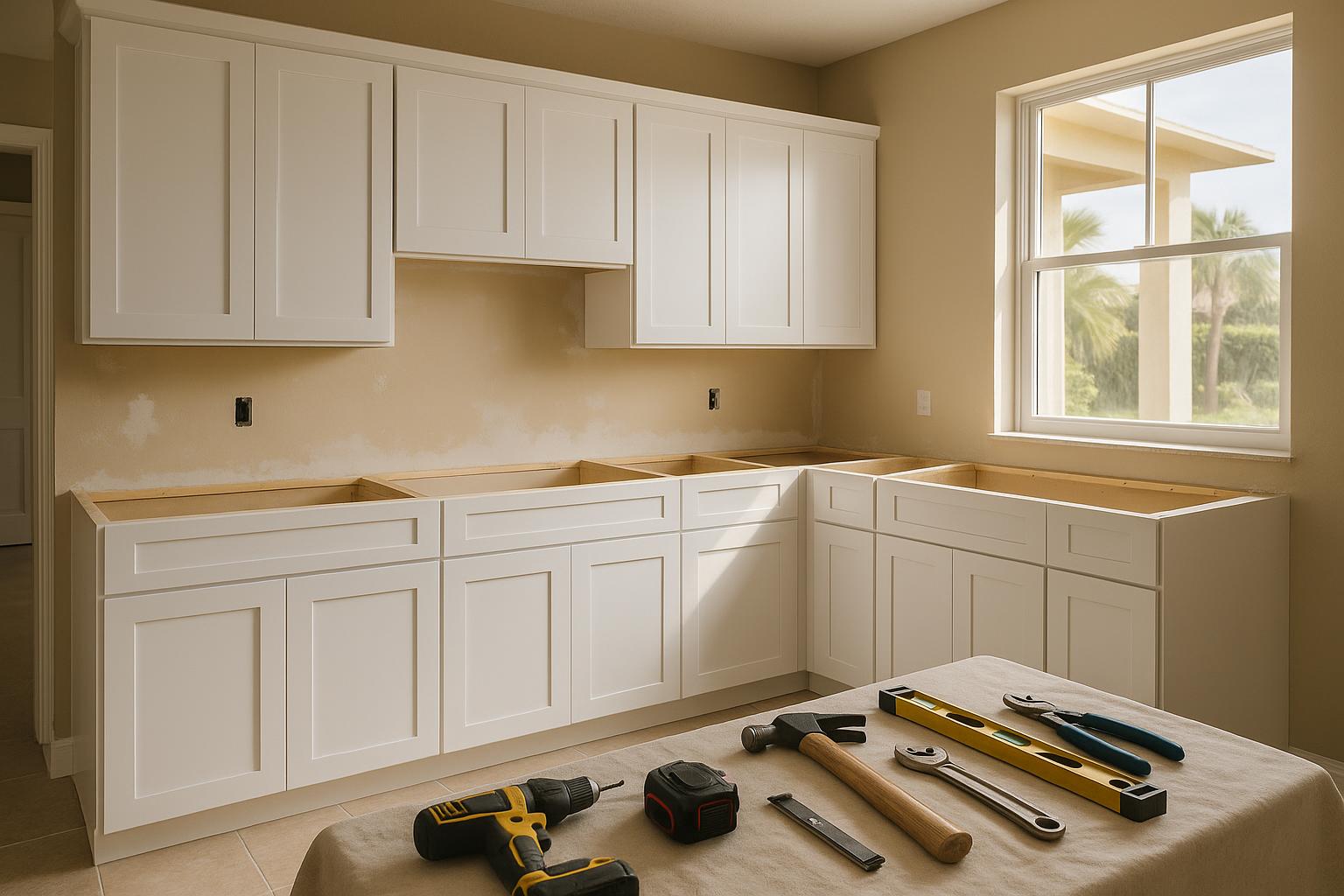
5. Cabinet Installation (3 to 7 Days)
Custom cabinetry takes longer to install than stock options, but the results speak for themselves. Proper installation is critical — cabinets need to be perfectly level and securely anchored to support years of daily use.
6. Countertop Fabrication and Installation (1 to 2 Weeks)
After cabinets are in place, countertops are templated, fabricated, and installed. Natural stone and quartz countertops require precise measurements taken on-site, so this step can't happen until the cabinets are fully set.
7. Tile, Flooring, and Backsplash (3 to 7 Days)
Whether you're going with porcelain tile, luxury vinyl plank, or a decorative backsplash, this phase adds the visual personality to your kitchen.
8. Fixtures, Appliances, and Final Details (3 to 5 Days)
Plumbing fixtures get connected, appliances are installed, hardware goes on the cabinets, and all the finishing touches come together. A final inspection and walkthrough wrap up the project.
What Causes Kitchen Remodel Delays?
Even with the best planning, delays can happen. Here are the most common culprits we see in South Florida:
- Material backorders: Supply chain issues can push delivery dates for specialty cabinets, imported tile, or specific countertop slabs. Ordering early is the best defense.
- Permit delays: Municipal permitting timelines vary. In Broward County, some permits are issued quickly while others take weeks. Your contractor should account for this in the schedule.
- Hidden problems: Older homes in Lauderhill sometimes reveal surprises during demolition — water damage, outdated wiring, or plumbing that doesn't meet current code. These issues need to be addressed before the remodel can continue.
- Change orders: Deciding to switch your countertop material or add recessed lighting mid-project is completely fine, but it will adjust the timeline. The more decisions you finalize before construction starts, the smoother things go.
- Weather: While kitchen remodels are mostly interior work, Florida's heavy rain season can occasionally impact deliveries or exterior-related tasks.
Tips to Keep Your Remodel on Schedule
You have more control over your timeline than you might think. Here are practical steps that help:
- Make all material selections before demolition day. Cabinets, countertops, tile, fixtures, hardware — have everything chosen and ordered well in advance.
- Set up a temporary kitchen. A small station with a microwave, coffee maker, and mini fridge in another room makes the process much more livable. You'll stress less about the timeline when you're not completely without a way to prepare meals.
- Be available for decisions. Quick responses to your contractor's questions prevent work stoppages. Even a 48-hour delay in choosing a grout color can push the schedule.
- Hire a contractor who manages the full project. When one company handles demolition, plumbing, cabinetry, countertops, tile, and fixtures, scheduling is seamless. Coordinating multiple independent contractors yourself is where timelines fall apart.
- Build in a buffer. Add one to two weeks to whatever estimate you receive. It's better to be pleasantly surprised than frustrated.
Why the Timeline Is Worth It
We understand that weeks without a kitchen feels like a long time. But consider this: you'll use your new kitchen every single day for the next 15 to 20 years. A few extra weeks of patience during construction pays off in a space that functions better, looks beautiful, and adds real value to your home.
Homeowners across Lauderhill, Plantation, Sunrise, and Fort Lauderdale trust Hartwell Home Extension to deliver kitchen remodels that are worth the wait. We keep you informed at every stage, coordinate all trades under one roof, and work efficiently without cutting corners.
Ready to Start Planning Your Kitchen Remodel?
If you're considering a kitchen renovation, the best time to start planning is now — especially if you want to lock in material selections and get ahead of permit timelines. Contact Hartwell Home Extension today for a free consultation. We'll walk through your goals, give you an honest timeline, and help you create a kitchen you'll love coming home to.